Changes in Fall

shutterstock_397724686


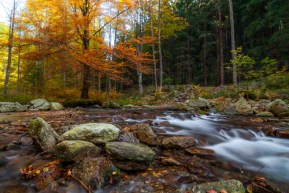
Everything changes when the season changes. In fall, the nights cool down, the yellow leaves flutter to the ground in batches, the daylight shortens and that hint of chill in the air makes me reach for a wool cardigan. The scents of wood burning and over ripe apples drifts about. General agreement on the start of fall season centers on the autumnal equinox. But I listen for fall with my ears: the geese squawking, the rustle of dry leaves, and the silence left behind by the now hibernating lawnmowers.

This is the season that calls me to take long walks: around a pond, or a reservoir, or along a river. Always near water and trees. The combination of warm fall colors and the sound of water lapping soothes me and prepares me for the coming winter which, where I live, is sparkling white and frozen. The sun has a softer light now, more gentle than the blazing summer sun. The flowers in the garden slowly retreat, their leaves limp and brown-tipped. The vegetables are sturdier, especially the root vegetables burrowed into the ground that show only their aboveground greenery: the ferny carrot tops and the fat potato leaves.

I savor the perfect temperatures, the blue sky, the harvest from the garden, and the last blooming flower, the purple coneflowers. I hurry to complete my outdoor projects before the cold sets in. At dusk I turn on the lights in the house. It seems too early to need them, but it is dark well before my bedtime. Besides, I need time to adjust from the long summer days. In fall, the hours of daylight shrink noticeably each day until December when the dark outweighs the light. And then the process rewinds. Always changing, each season in its turn. Fall is a time with its own changes: the active, outer summer life to a quieter, inner life, still warm days but cold nights, the growing season to the harvest. This is the season when it is easy to offer gratitude for the earth’s bounty that sustains us.

Posted in Seasons | Leave a comment

Writing Distractions

shutterstock_21676123

So many everyday distractions. I try to take care of the details, plan ahead to minimize surprises, but they persist, those pesky distractions that steal my time, minutes and hours, and, if I’m not really careful, they become my life. I do my best to keep them at bay so I can spend my time doing what I love: writing, an activity that requires stretches of uninterrupted time.

The funny thing is that once I put the helter-skelter of quotidian concerns aside and carve out the time to write, an entirely different type of distraction shows up. Once I’ve written a few pages and begin to see the characters, hear their voices, and imagine a scene unfolding, let’s say in New York, I get a little nudge to look up something, like, which street borders Central Park on the west side? Or, who does that statue represent that stands just inside the gates near the skating rink? The source of that nudge is to make the setting or social context more realistic, include the particulars.

But the nudge doesn’t remain small and quiet. The volume rises as I write the scene and I become desperate for those details. When I can’t resist any longer, I surrender to it and Google a map of Central Park. That’s just the start of it. A Google-facilitated downpour of distractions ensues. I pore through layers of details. Some are totally fascinating and I convince myself these are essential to the story. Others are boring or useless, but that doesn’t discourage me. I swim deeper. Hours later I emerge, drunk with details, my writing stalled.

This does not happen every time I sit to write. It helps to remember that. These forays mainly occur when I’m considering the particulars of the setting and the context of the story. I search for a telling detail, one that will serve the purpose of giving the reader a sense of time and place. Other times I might go hunting for details on a character’s occupation.

I know these expeditions must ultimately serve the story. But I won’t pretend that I haven’t delved so deeply into a subject, say herbal medicine for example, that I’ve ended up in a protracted study of it, well beyond the requirements of the story. But my primary aim is to write the story, and it is because I’m writing a particular story that I find certain things fascinating, even if they seem only tangentially related to the story at first.

If I go too far afield, I simply step back from my writing desk, unroll my yoga mat onto the floor and explore a few poses. That’s best way I know to quiet my mind and regain a wider perspective on my story. After that, I find I can return to my desk and write for a longer time, unimpeded by the nudges that are temporarily satiated.

Posted in Writing | Tagged , , | Leave a comment

Child Pose View

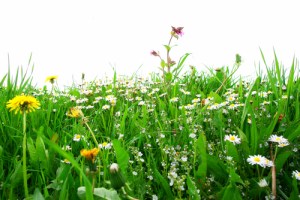
The first time I felt close to nature occurred one afternoon in my childhood when I was too young to find the words, or even have the thought that I was close to something big and wonderful, something that held me every day in an enormous embrace that went beyond the horizon and deep into the dirt. As a child my experience of nature was small, intimate, clear and detailed: the individual petals of dainty flowers that grew in the grass, their leaves smooth in spite of their sawtooth shape, the green stem so perfect, a slender tube covered in tiny hairs, a piece of art I could hold in my hand. I waved it in the air, twirled it, and placed it on the edge of the sandbox for safekeeping.

shutterstock_132460103

Tiny blades of grass spread over the ground and tickled my legs, turned my knees green, as I smelled their sweet freshness. Each blade, a spear of gentle green, tasted a little sharp and sour. And then I touched the bark of a tree where dad had rigged up a swing. I couldn’t quite reach the seat and balanced on the tree trunk to stand up higher. The tree was rough, jaggedy and unpredictable. I felt around for a place flat enough for my small hand. A piece of bark fell off. It was light, like paper, and tasted like nothing, just took up all the wetness in my mouth, so I spit it out.

The breeze came up that afternoon and caressed my face. I rolled over onto my back and looked up, through the leaves and branches of that tree to the clouds sailing by: wisps of white, drifting and changing shapes far out of reach. My mother leaned over and brushed my forehead. She’d been sitting next to me in her lawn chair, but until that moment, I’d forgotten she was nearby. That contact with my mother ignited the moment. That loving, human touch made me realize the world that surrounded us was equally alive and held us, mother and daughter, in a silent embrace with no expectation, amid the quiet beauty of its incremental unfolding.

Posted in Seasons, Yoga | Tagged , , | Leave a comment

It Takes all Kinds

shutterstock_455674711Does it take all kinds? I hope so, because lately I’ve been feeling I am one of a kind more often while everyone around me is falling into line, into place, wearing a kind of uniform – as if they are all ready to work out, run a mile, or hike for a few hours – all drinking the same kind of coffee and using their cell phones as if it were another appendage, one required for survival.
It’s not the way I operate and it’s starting to be an issue – with my friends. It starts with what they think is a simple suggestion, a no-brainer, let’s stop at Starbucks and get a coffee. Do I give them my whole speech about burnt coffee beans and cancer, or just suggest we stop at the Boulangerie instead? When we are having a lovely chat over lunch and they pull out their cell phone and start texting, I’m at a loss. Do I point out it’s rude, or politely ask who they’re communicating with? After a while it’s too exhausting and I just want to be alone for a while, read a book, make a cup of my favorite coffee with beans from Italy.

But I can’t keep up being alone forever, even though I can go for longer than most people. Sound selfish? Okay, but I enjoy my own company and I’m not hurting anyone, so I indulge myself. And yes, even that recluse at Walden Pond went into town once a week to visit his friends. But he had the good fortune to live near (and within) an entire community of kindred spirits, Transcendentalists, each of whom carved a unique path expressing their notion of the divine residing in Nature. How lucky. Still, he returned to his rustic cabin to be alone.

Thoreau chose Concord, Massachusetts, which was, at the time, a rural community. He chose those people, alike in their view of the world, but an intellectual island initially. After years of conversing, writing, and painting, the Transcendentalists’ ideas spread widely over geography and time and affected how we see the elements of nature. They pointed to the elegance and beauty in the rivers, the forests, the meadows, and the seasons, the sunsets, and the noon day sun. They used their art, poetry, writing as vehicles to express the way they experienced the natural world.

Thoreau lived alone on Walden Pond, chopped wood, cooked his meals and wrote his thoughts, which became classic books, still read today. Maybe it does take all kinds.

Posted in Writing | Leave a comment

Being a Tree

SCAN0105

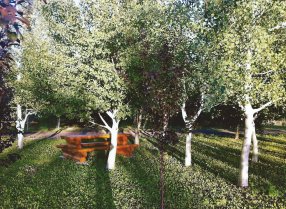
If I were a tree I would have a wild head of hair, my branches growing in every direction – up, down, all askew. My trunk would have white bark, pure white bark, with large black gnarls where lower branches had broken off in the windstorms that coursed through our valley. Other trees of my kind would gather around and we’d form a circle, our thin, outer branches touching in the slightest breeze.

In summer, my leaves would weave a green screen and offer a shady spot for any passersby: a child, a fox, a pheasant, or a fairy. On one arm, I’d hold a long rope threaded through two sides of a wooden slat that would dangle invitingly. That swing would strong enough to hold a child or a good-sized adult, anyone who might want to wheel out of reach or be lifted high for a different view of the valley.

I’d be as plain as a tree could be, with no fruit or blossoms. But if you looked in my direction, you’d certainly notice me. My branches would spindle out tall, thick, and wide, all around, but one side, the wounded side. That side of my trunk, the one that faced the river, would be stripped bare where a giant had circled my trunk with his thick arms and cried away his heartbreak for an entire spring and summer. Only the fairies singing their sweet melodies would console him, while the earth absorbed his sorrowful tears and wove a carpet of green to restore our spirits.

No matter that I would be anchored to a singular place on the bank of a river. I would send my roots deep and reach my branches high, keeping a firm foundation and yet bending to the elements.

Posted in Seasons, Yoga | Leave a comment