Pregnant Pause

shutterstock_530528119


The pause is a suspension of activity often used in speech with little forethought or consideration. For example, the awkward pause that occurs when someone says something so utterly absurd or confounding you are left speechless. Then, there is the pregnant pause, fertile with meaning but not a word is uttered to explain and an extended silence drops down over the conversation. For the uninitiated, it is difficult to distinguish the awkward from the pregnant in almost all situations.

Then there is the comedic pause, part of the timing of a joke or comic skit. A few masters have passed along the secret of generating laughter by artfully using the pause. Think Johnny Carson, if you’re old enough, or Jerry Seinfeld who held a peculiar expression while he paused, as if to underline the hilarity of the situation or what someone had just said, often having to do with awkwardness or pregnancy.

Last in my list is the pause that refreshes. You know, Coca-Cola, although I think they’ve moved on from that tagline. When it was new, it felt good: take a pause while you drink it, enjoy it, don’t drink absentmindedly or just to douse your thirst.

All told, I like my pauses plain, straight up. Take a break, sit back, look out the window and smile as if you just thought of the loveliest thing. Don’t worry if someone’s looking. Strike a pose and hold it while gazing up into the sky. Put down your pen and look out the window. Start to tell a story and then stop midway. See if anyone asks you to continue. This could be awkward or elegant.

Give the pause a new moniker and see what happens. If asked, say you are contacting your muse, or practicing a trance state. Try that and see how it goes. Who knows, you might develop an appetite for the suspension of activity, a moment that some call “being in the moment.” This just might result in a new way of seeing things, open up the imagination, precipitate a rush of new ideas and, if you are lucky, result in pages of new prose.
Posted in Writing | Tagged , | 1 Comment

Falling

IMG_0313

The photograph of flowers that sits at the head of my blogpost belies the actual weather outside my window. It has turned cold, the leaves have fallen, and a light sprinkle of snow hugs the edges of the fence. In Chinese medicine, this is a time to follow the natural inclination to turn inward, to study, take quiet walks and allow time for more rest. All to keep ourselves in balance as we sweep toward winter.

In yoga practice, this is a season to emphasize calming poses — forward bends and shoulder stands — and adopt a practice of restorative poses. This can be remarkably soothing, better than a massage or a nap, as it is deeply restful for the body, mind and emotions. I am fortunate that our local studio offers several restorative classes each week, but anyone can learn a basic pose, take it with additional props (bolsters, blankets and an eyebag), and rest for fifteen minutes or longer. The effect is renewed energy that is smooth and peaceful.

I don’t know if there is a season for writing. It seems all the workshops are in the summer, yet I write more in the dark months, as if my creative energy is shy of too much sunlight. I continue to follow my private writing schedule and, as often as possible, I attend a “Free Fall” writing group. A dozen or so of us meet on Friday mornings and follow W. O Mitchell’s approach to writing freely — pen to paper, no editing, no apologies — then we read aloud and marvel at what we’ve produced. The non-judgmental atmosphere suits my shy muse and has led to any number of charming short pieces.

In this season and beyond, I hope you find a practice or routine that feeds your creative energy and draws out your muse. The smooth energy from yoga poses and the kind spirits of fellow writers is the best recipe I’ve found so far to smooth a path that helps me fall away to the edges where I find the most interesting notions.

Posted in Seasons, Writing, Yoga | Tagged , | Leave a comment

Lyrical Composition       

shutterstock_56163151

Along with the urge to write comes the desire to tell a story, share a vision, or create a world. When I write, I also aim for literary composition and hope to achieve lyricism and beauty. This can be as elusive as the goal of balance and poise in a yoga pose. My ability to produce a story that has these qualities is influenced, in the most basic sense, by my mastery of the art and craft, but also by my frame of mind, a chance encounter, or a song I overheard.

According to Stephen Spender, one of the five qualities of literary composition is Song. He defines it this way: “Song is the expert use of language, not merely in the sense of correct usage, but in the sense that language is the means by which a certain music is created, a sound in the ears as well as logic for the mind. It is meter, it is rhythm, it is emphasis, it is even gesture.”   (From: The Art of Writing Fiction, by Ray B. West)

Using language in this way to tell a story can be challenging. For most of us, it takes practice, but it is a worthy goal. Determining whether I’ve achieved it is so subjective, it’s difficult to measure. One way I know I’ve gotten close is when someone reads what I’ve written and sighs, or says “aha,” or cries, or calls out in delight. That is the reason I write.

Posted in Writing | Tagged , | Leave a comment

Lost Worlds


shutterstock_212458156

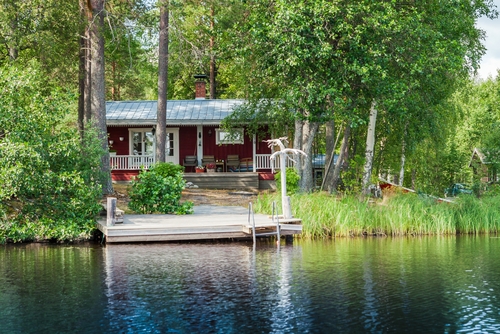
Lost worlds. Some wonder where the water goes when it leaves a puddle. I wonder where the worlds go, the ones I used to inhabit. People say: “That happened in another life.” What they really mean is another world, because the way world the was at a particular time seems as if it happened somewhere else, somewhere far away. For example: where did Finky’s Hardware Store go? I know it was right there on Old Shakopee Road, across from Mrs. Brown’s house. We used to ride our bikes there, when we were old enough to ride down the hill, and buy things like jawbreakers and chocolate milk. We’d go in the summer when the weather was fair and the roads dry. We’d peddle down the hill to make our bikes go even faster, the wind whistling in our ears. Funny how that hill doesn’t seem nearly as steep now as I drive down to the collection of stores at the corner. A strip mall is there now, no sign that little store was ever there, but I swear to you it was.

Then there’s the cabin at Woman Lake. I went to visit last summer and found the shoreline crowded with houses, cottages they call them, but they were four bedroom houses all steep roofed with big glass windows, and each one had a boat dock. Where did our cabins go? The ones that were small, two bedroom affairs, with musty mattresses and moldy old books, a sofa with mashed springs where we played double solitaire for hours? The cabins we went to every summer for two months with one dock for all six cabins, where dad tied up the fishing boat and we jumped off the end of the dock, plunged into the cold water, only to surface breathless.

I remember one afternoon a thunderstorm storm howled around us and we waited for the sound of dad’s outboard motor to let us know he was back from fishing on the lake. Our mother wrung her hands and told us everything would be fine just before the lights flickered and the electricity went out. All of us kids hid under the beds.

I like to think those worlds are still there, somewhere, maybe in another dimension or parallel universe, and another little girl is peddling her bike as fast as she can downhill and diving into the lake, her skin tingling, her lips turned blue. If that world is no longer somewhere, held in a special time or place where I can visit, I’m afraid I’ll stop believing it ever existed and that there have only ever been strip malls and big houses on the lake. Then, that other world, with all of its sweetness, will be truly lost.


Posted in Seasons, Writing | 2 Comments

Balance and Poise                      

shutterstock_53291476

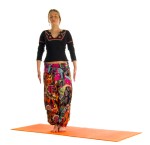
When we practice yoga poses, we hope to attain a state of balance and poise. This goal is elusive for many reasons: level of skill in a pose, degree of focus, temperament that day. In addition, we seek a state that is not static but dynamic, one that includes varying degrees of (im)balance – wobbly, temporary, stable, rooted. In a simple pose like Tadasana (Mountain pose) we can feel balanced and poised until a movement or sound distracts us, and we tilt, or, having gone slightly unconscious, we lose awareness of the myriad of movements that result in the well-balanced pose: firmly grounded feet, well-aligned spine, full spinal extension.

Even a simple standing pose like this requires so much focus that an urge can rise in us to move onto something more energetic. If we stay, we cultivate the experience of feeling well balanced and poised, even if only for a moment. If we move, we lose the possibility of feeling more rooted.

If we pay close attention, the manner in which we take yoga poses can reveal how we approach more than the poses, but also the way we approach life. We might discover we are forceful or graceful, disciplined or sporadic, focused or distracted. Each observation provides guidance and hones our inner teacher:  the one who knows us best and can direct us toward an optimum practice.

As yogis, we are asked to observe our approach to asana practice without harm (ahimsa) or judgment, and pursue equanimity through balance and poise. These are worthy, and challenging, disciplines that require ongoing alertness in our practice.

Why is this important?

The rewards are great. The purpose of yoga is union, the integration of the body and the mind, the internal and external. From the first steps of working toward this goal, we find more mental concordance and physical health. Suffering diminishes. As the body-mind alignment grows stronger, our vital forces strengthen and this brings energy and ease.


Posted in Yoga | Tagged , , | 1 Comment