Writing in Layers

shutterstock_205179871

When I only had the dim beginnings of a novel, not even an entire first draft, I went to a conference with my husband and we ran onto a man he’d known, an author. He told his friend I was writing a novel and asked him to give me advice. That man looked at me and spoke only one word, after which he melted away in the crowd. He said “layering.”

At that moment I could guess what he meant, but layer what, exactly? Since I was still writing my first draft, I left that advice for a later date. Although I didn’t write down that word, it stuck in my mind as a question.

Now several drafts later, I am prepared to make a few observations about layering “from the field” and what it turned out to be in my writing.

My first draft told the story, but when I’d finished writing and read it, I could see it would benefit from a stronger story structure and addressed that. Upon completion of the second draft, I could tell the story begged for more, but what? Instead of going straight to the idea of a revision or rewrite, I remembered that word: layering. This single word stirred my imagination more than those others – which seemed arduous and sluggish. I thought of layering as elaboration, adding more flavor, more detail, more insight into the relationships of among the characters.

Thinking of the third draft in terms of adding in layers made it seem more like the part of writing that appeals to me, the inventive and creative aspect. As I undertook that draft I  considered undercurrents, complexity, subplots, and character nuance. I became engaged with the story and characters at a level deeper than I’d imagined possible.

Each draft required something else from me: additional research, elaborating certain scenes, recognizing a place to show a character in a different light. These efforts, and how I imagined them, became my definition of layering. A multi-faceted activity, I engaged with each draft as a work of art considering ways to enhance the texture, mood, and language. They say you know when you are finished with a novel. I’d said I was a few times, but it came from my head. Now I am closer to the completed manuscript I’d imagined and it is a felt thing that comes from the beauty the layers provide.

Posted in Writing | Leave a comment

Layering in Yoga

shutterstock_17293141A yoga pose, a series of poses, a flow of poses (or asanas) can get the blood to flow, the joints to open, the breath to quicken. This physical enlivening is a pure experience when  done with our full attention. We strive to avoid distractions, especially that voice that tells us we are just repeating. Instead we aim to focus fully on each pose as a new experience and capture this unique moment in time, adding it to our treasure chest of experience, hoping to improve and go deeper.
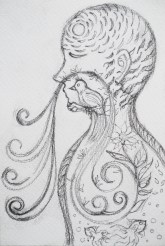

One of my non-yoga teachers, Emily Conrad, encouraged us to repeat a series of movements in our practice. The idea is to move (and breathe and sound) in a particular way, then pause to notice what occurred in our bodies as a result – either standing, sitting or lying still. Then, do another round, or layer the series, and see what the second round gives rise to. Sometimes a yoga teacher will instruct students to do a pose more than once. But the key is the pause in between poses. When we work this way, the body adjusts and the pose deepens quite naturally with each round.

The pause (or open attention) sets the pose(s) in the body at a deeper level. It’s like practicing a golf swing and being open to a different swing each time, exploring how to move to get a better, longer drive. But we don’t typically have such a measurable outcome as distance with yoga poses. It can take months or years before we see a noticeable difference in the way we perform a pose.

Layering, doing another round of a pose or poses followed by a pause, and giving this our full attention, is an opportunity to experience the pose from inside the body, feel the subtle sensations created, and know the pose from the inside out. It cultivates curiosity and appreciation about the inner workings of the pose. When we notice the benefits, directly experience them while at rest, we amplify their effects and come to better understand our own bodies.

Posted in Yoga | Leave a comment

Favorite Day


I’m not going to tell you, not today, maybe not even tomorrow. I’m not going to tell you because it means too much to me and I don’t want you to tell me it’s silly or self-indulgent. But I will tell you this: one day I’m going to take each day on my own terms. Wake up in the morning when I’ve slept enough, eat ice cream for breakfast and lunch, then go to a museum or a library, like the library on 12th Avenue. You know the one, that beautiful old Carnegie library that smells of old books and has beautiful, sweet rooms that hold only soft murmurs as people whisper for help or check out books.

That’s where I’ll be in the afternoons, trolling for books on those old shelves, or reading in a hidden corner. I’ll let my imagination open up, fully bloom – no telephone ringing, no doorbell buzzing, no mailman slamming the box shut, no bells, no ringers, just quiet, a beauty rest for my mind. I’ll find a book of poetry and begin to whisper the words. Then I’ll write a few words of my own on the back of a sales slip, but too many will fly out and I’ll have to ask the librarian for a sheet of scrap paper to write them down. When they stop, I’ll close my eyes, take a moment of ease, then read the next poem in that book.

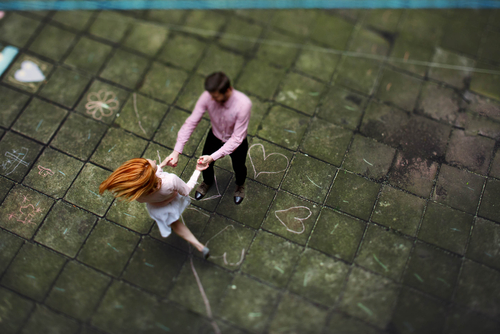
Maybe after days or weeks of this I’ll long for the sounds of birds chirping, the rustle of leaves, the music of an ice cream truck. If I do, I’ll go outside, sit in the park and take big gulps of air, tilt my face up to the sun, dance a little. If you find me there, dancing, you’ll know it’s time. Take my arms and swing me around. Then I will tell you. I’ll tell you everything.

Posted in Writing | Leave a comment

Quiet Mind

shutterstock_239812054 copy

To write requires focus. To practice yoga requires practice. Yes, but how do we achieve focus? Many years ago, I started with meditation, using a mantra, gently directing my mind to a quieter state and, while I had occasional moments of deep silence, mostly I experienced the full busyness of my mind, the wanderings, random thoughts, and those nasty repeating stories that are so distracting.

As the rhythm of my exterior life accelerated — along with the disparate voices, demands and desires every adult faces in their own way — I noticed my mind raced more. Yoga asana (postures) helped me settle in my body, but, when I sat to meditate, I felt I had missed an entire chapter. Fidgeting, whirling thoughts still rose up each time. Even after years of meditation, I couldn’t always tame them, until I took up the practice of yogic breathing.

The practice of slow breathing — lying still, counting the length of each inhalation and exhalation — opened the door to a deeper stillness. The immediate physical feedback holds my attention: the sound of the breath, the rising and falling of my chest, the release of tension in my jaw, neck, eyes. My breath becomes slower, deeper. This practice naturally soothes and quiets my mind.

Over time, I sought out Iyengar pranayama teachers to refine my practice. The benefits are many; most obviously it’s a natural de-stressor. It also creates a particular state of mind: less attachment to external events, a more open heart. This practice makes it easier to approach my yoga postures and my writing with clarity and focus.

You writers may want to refer to Dorothea Brande’s book, Becoming A Writer, in which she describes another way to quiet the mind, prefaced by the importance of doing so.


Posted in Writing, Yoga | Leave a comment

Writer’s Drug of Choice


shutterstock_323338121 copyYou may have read stories about famous writers,  how they worked, and, in some cases, the drugs they used. There are the stories about Hemingway who had a rollicking affair with alcohol, the hard stuff, and still wrote volumes, extremely good ones, too. Then there’s Poe who took opium, not illegal in his day, but his use was not medicinal but look at the works he produced. I could go on and write about stoking the imagination but my herb of choice does not veer in that direction. It is not made from hops or rye or tobacco or marijuana, although I do like fermented grapes. My needs are more quotidian and fall along the lines of John Irving, one of my favorite authors for the twists and turns and sheer trouble with which he plagues his main characters.

Mr. Irving handwrites the first draft of his novels. He’s written fourteen of them; one close to eight hundred pages long. He says he engages the services of a massage therapist who works on his hands so he can keep writing. Now that is an important bit of news. Whether he has arthritis, or has plain worn out his fingers, he’s taking the matter seriously. He didn’t say whether he took any drugs for inflammation or joint pain, but here is my perspective on this.

After six months of writing for several hours every day, my wrists and shoulders began to cramp. My trapezius tightened up, then my back, and my fingers tingled. I bought a new desk chair and set reminders to sit properly. I worked out with hand weights and added a yoga class each week.

Even though I’ve been a yoga practitioner for years, I  don’t often eat Indian food. If I had, I would’ve known the benefits of turmeric, a culinary herb that also has anti-inflammatory properties. Fortunately, a very knowledgeable Indian man operates my yoga studio and when I mentioned my problem, he suggested I ease off my practice for a few days and try turmeric.

I practice Iyengar yoga and that means when one of my joints is tender, or limited in range, or just plain tired, I provide support and let it rest. To that I added turmeric, one capsule a day, and got relief within a week. Now it’s part of my routine: work toward a good, seated posture while writing and take turmeric. Now I (mostly) write without discomfort. No distracting pain. This herb, known more widely as a culinary herb, is my drug of choice and keeps my writing smooth. No mind altering required.

Posted in Writing | Leave a comment